Lichen, Algae or Moss? Identifying What Is Growing on Your Blackpool Roof
Look up at almost any roof in Blackpool and you will spot something growing on it. Green cushions along the ridge, dark streaks running down the slope, or crusty little patches clinging to the tiles. Most people lump it all together as moss, but in truth there are usually three different things at work, and each one behaves in its own way.
Knowing which is which is more useful than it might sound. The type of growth on your roof tells you something about the condition of your tiles, how urgent a clean is, and what treatment will actually shift it. In this article we will help you tell moss, algae and lichen apart, and explain why the exposed, damp Fylde coast is such a happy home for all three.
The quick answer: Moss is the thick, green, spongy growth that gathers in clumps, often along ridges and in gaps between tiles. Algae shows up as flat black or dark green streaks staining the surface. Lichen is the crusty, flat, grey, white or orange patches that cling stubbornly to tiles. All three thrive in Blackpool's wet, salty coastal air, and all three respond to a proper soft wash with biocide.
1. Moss: the growth you can spot from the street
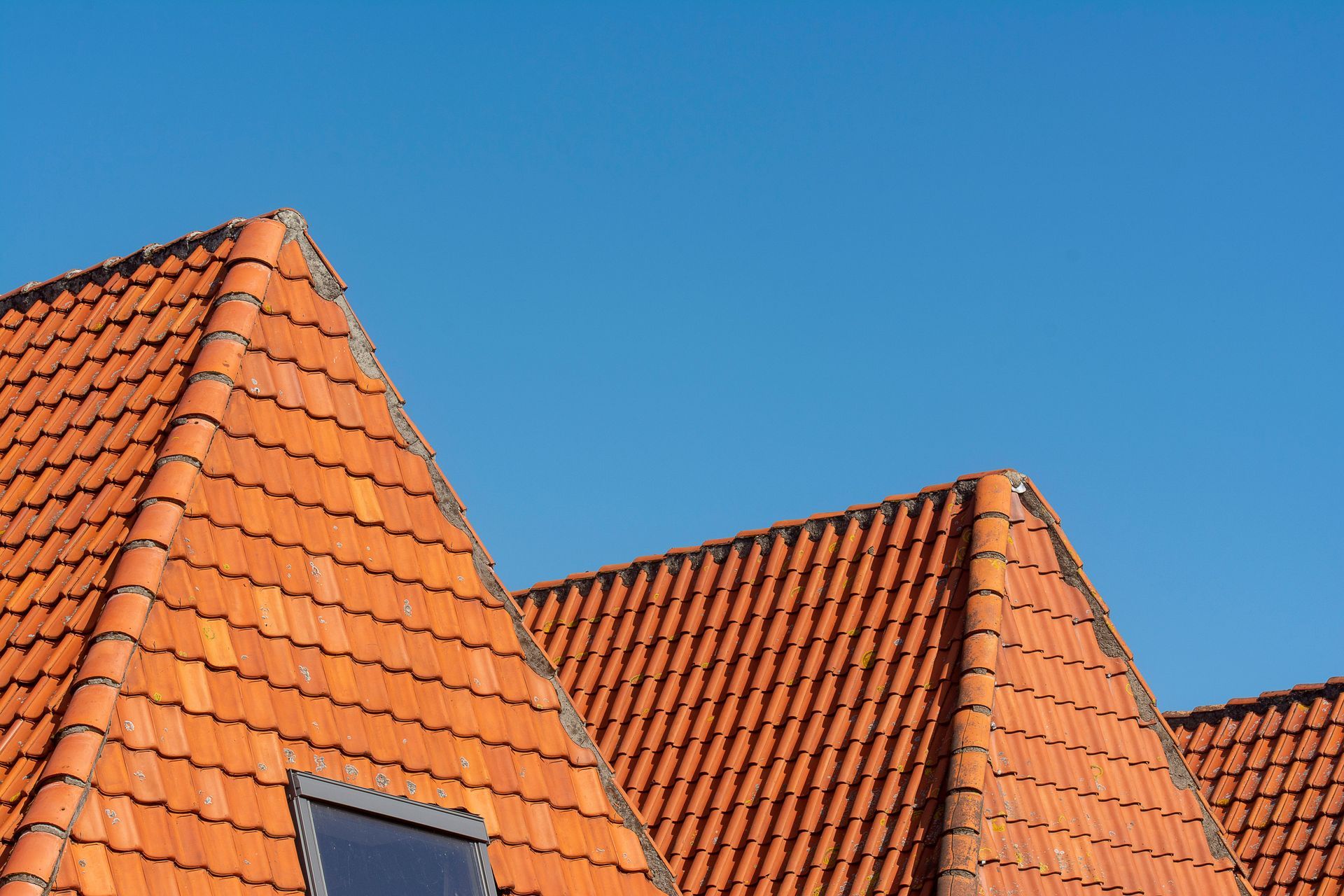
Moss is the one most people recognise straight away. It forms thick, green, spongy cushions, usually gathering along the ridges, in the valleys and in the gaps between tiles where moisture lingers. On a badly affected Blackpool roof it can build up into a dense carpet, sometimes hanging over the edge into the gutters below.
What makes moss more than just an eyesore is the way it holds water. Like a sponge, it soaks up rain and keeps the tiles beneath permanently damp, which in this climate is a recipe for trouble. Chunks of it also break away and wash down into gutters and downpipes, causing the blockages so many local homeowners end up dealing with. Of the three, moss is often the most visible sign that a roof is overdue a clean.
2. Algae: the dark streaks down your slates
Have you ever noticed those long black or dark green streaks running down a roof, almost like something has stained it from the ridge? That is algae, and it is extremely common on Blackpool roofs. Unlike moss, it lies flat against the surface rather than building up in clumps, so it is easy to mistake for general dirt or weathering.
Algae feeds on moisture and the fine deposits that settle on a roof, both of which are in plentiful supply in a damp coastal town. While it does not trap water the way moss does, it stains badly and makes a roof look tired and neglected. Left alone, it spreads across the whole slope and can be the first thing that gives an otherwise sound roof a grubby, aged look.
3. Lichen: the stubborn crusty patches
Lichen is the one people find hardest to name. It appears as flat, crusty patches in shades of grey, white, pale green or even orange, and it clings on with real determination. You will often see it speckled across older tiles and slates, and it can be surprisingly tough to remove because it bonds tightly to the surface.
Interestingly, lichen tends to favour cleaner air, so its presence is not necessarily a sign of pollution. What it does need is time and a stable surface, which is why it turns up so often on the older Welsh slate of Blackpool's Victorian terraces and resort housing. It works into the tiny pits and pores of a tile, and shifting it properly calls for the right treatment rather than brute force.
4. Why the Fylde coast grows all three
Blackpool offers close to perfect conditions for moss, algae and lichen alike. Sitting right on the exposed Fylde coast, the town is wrapped in damp, salt-laden air blowing in off the Irish Sea, and it sees more than its share of wet, windy weather through much of the year. That constant moisture is exactly what all three types of growth need to thrive.
Add in the dense terraced streets, where properties shade one another and roofs stay damp for longer, and you have an environment where growth takes hold quickly. North-facing slopes that rarely catch the sun are particularly prone. It is no accident that roofs here tend to green over faster than those in drier, more sheltered parts of the country.
5. Why the difference actually matters
Identifying what is on your roof is not just an academic exercise, because each type points to slightly different concerns. Heavy moss signals trapped moisture and a real risk of blocked gutters, making it fairly urgent. Widespread algae is mainly a cosmetic problem, though it spreads if ignored. Lichen tells you the surface is being colonised and is often a sign of an older, more porous covering.
Knowing the mix on your particular roof helps shape the right approach and the right expectations. A roof thick with moss needs careful removal of that bulk before treatment, whereas one mainly stained with algae is more about thorough biocide application. A professional will read all of this at a glance, which is why an on-site look is always worthwhile.
6. How soft washing deals with all three
The good news is that whatever the blend of growth on your roof, the same gentle method handles it. Soft washing uses low-pressure water together with a specialist biocide, and that biocide does not care whether it is tackling moss, algae or lichen. It kills the growth at the root and keeps working for months afterwards to hold it back.
This is where high-pressure jet washing falls down. Blasting lichen off older slate can take the surface of the tile with it, and forcing water under tiles causes its own problems. Soft washing avoids all of that, lifting away moss, clearing algae stains and breaking down stubborn lichen without harming the covering underneath. One method, done properly, sorts the lot.
- Moss: thick, green and spongy, gathering in clumps and gaps, holding water against the tiles and clogging gutters.
- Algae: flat black or dark green streaks that stain the surface and spread across the slope if left.
- Lichen: crusty grey, white or orange patches that bond tightly to older tiles and slate.
- The common cure: a soft wash with biocide tackles all three safely, without the damage caused by pressure washing.
Frequently Asked Questions
Is moss worse than algae for my roof?
In terms of damage, yes, moss tends to be the bigger concern because it holds water against the tiles and clogs gutters. Algae is mainly a staining and appearance issue, though it does spread over time. Both are worth removing, but heavy moss is usually the more pressing.
Why is lichen so hard to remove?
Lichen bonds tightly to the surface of a tile and works into its tiny pits and pores, so it does not simply brush off. That is exactly why it needs a proper biocide treatment that breaks it down over time rather than aggressive scrubbing or jetting, which can damage the tile.
Does black staining mean my roof is damaged?
Not usually. Those black streaks are almost always algae sitting on the surface rather than damage to the tile itself. A soft wash lifts the staining and, with the biocide continuing to work, keeps it from returning quickly.
Why does my roof grow so much when my neighbour's does not?
Small differences make a big difference. A north-facing slope, shade from nearby buildings or trees, and an older, more porous covering all encourage growth. On Blackpool's tight terraced streets, one roof can green over far faster than the one next door.
Can you remove all three types in one visit?
Yes. Soft washing with biocide treats moss, algae and lichen together in a single process, so there is no need for separate treatments. We assess the mix on your roof and apply the right approach to clear all of it.
Not sure what is growing on your Blackpool roof?
Ben's Roof Cleaning brings over 15 years of experience in safe, effective roof cleaning across Blackpool and the surrounding area. Get in touch or call 01253 201397
for a free, no-obligation quote.
Knowing what you are dealing with is the first step
Moss, algae and lichen may all look like the same green nuisance from the pavement, but each tells its own story about the state of your roof. On the damp, exposed Fylde coast, most roofs end up hosting a mixture of all three. A professional soft wash clears the lot and keeps it at bay, so your roof looks and performs the way it should.